 ™︎
Indoor Farms and Regenerative Agriculture for Regional Food Supply.
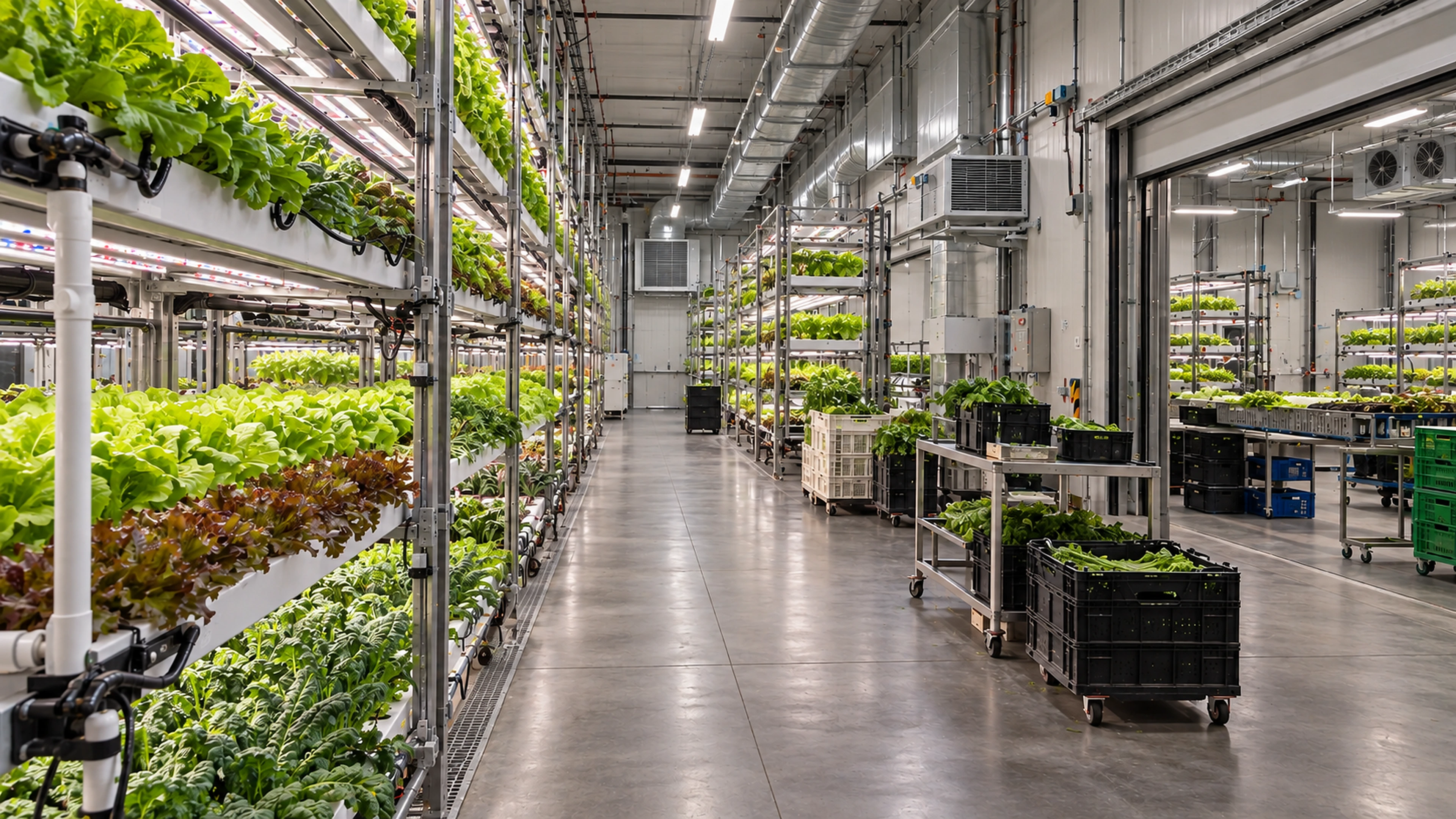
What the System Includes.
Commercial indoor-farm complexes may range from basketball-arena scale to football-stadium scale where the site and operating case support them. Indoor vertical farms use a fully enclosed, windowless growing environment with LED-only crop lighting and controlled air, temperature, humidity, irrigation and nutrients. That controlled-environment model is considered alongside regenerative land management, livestock, fisheries, processing and distribution.
Proposed Components.
- Commercial indoor-farm complexes from basketball-arena scale to football-stadium scale where land, demand, utilities, operators, economics and approvals support them
- Outdoor crops, orchards, rotational livestock and silvopasture
- Food-security fisheries and aquaculture where water, species and permits support them
- Atmospheric water generation assessed as a supplemental farm-water option
- Greenhouses, seed and nursery functions, pollinator habitat and soil-building practices
- Cold storage, food processing and local distribution
- On-site microgrids and community grids assessed against farm electricity demand
Independent references: Fieldlab Vertical Farming ↗ describes a conditioned, closed growing environment without natural light. Wageningen University & Research cultivation guidelines ↗ discuss artificial LED light, climate conditioning and air movement. These are design references, not a claim of certification to a Dutch standard; crop, energy, water and operating performance remain project-specific.
Site and Delivery Considerations.
A project review tests the conditions that determine fit, cost and long-term operation.
- Soil, water rights, hydrology and agronomic suitability
- Crop, livestock and fisheries plans with market/offtake evidence
- Energy intensity, load profiles and operating costs including AWG
Project-Level Requirements
Assessment depends on a defined mandate, site information, rights, qualified technical review and a documented delivery pathway.
Review scope ↗